INDUSTRY:
TECH
CLIENT:
UCLA
YEAR:
2025
EXPERIENCE:
TECH
Machine Learning & Cultural Heritage
about.
This project reflects the approach I bring to digital cultural work: technical skill grounded in critical inquiry. I don’t just use tools, instead, I question their logic, examine their blind spots, and consider their impact on cultural visibility and memory.
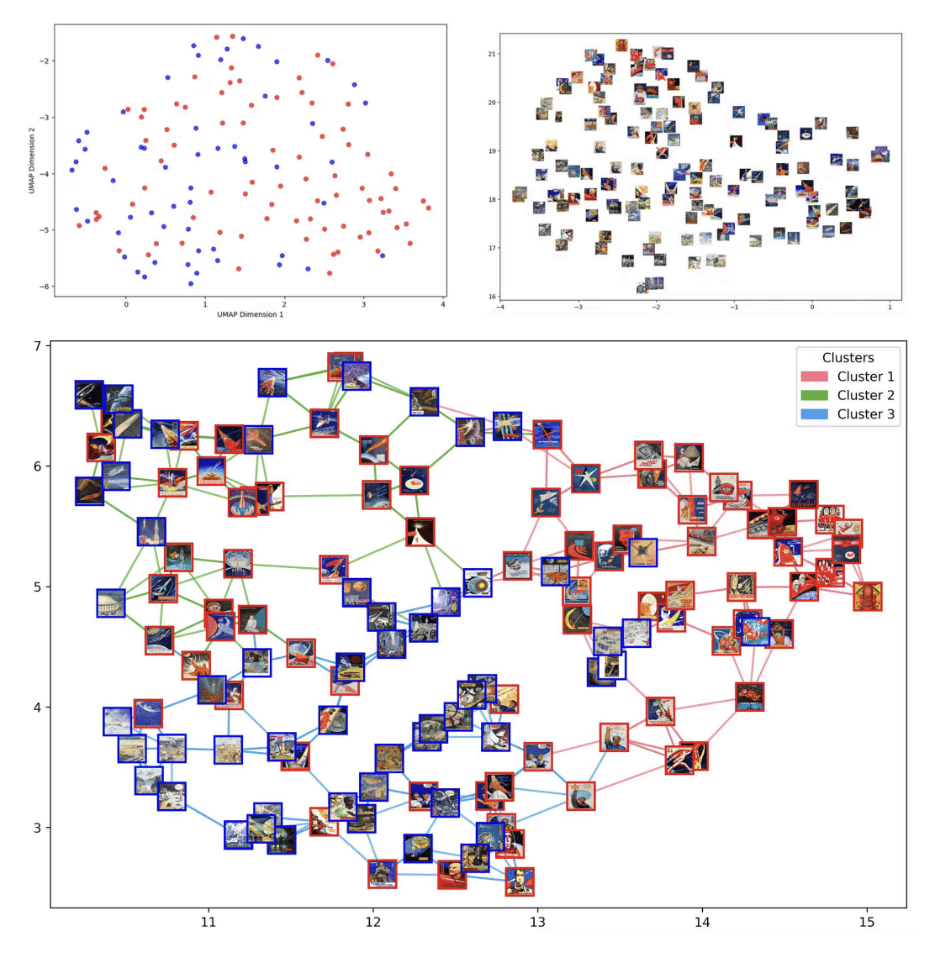
For this digital humanities project, I applied machine learning methods to analyze Soviet space propaganda, focusing on state-issued posters and Tekhnika Molodezhi magazine covers. Using image clustering, UMAP projections, and interpretability tools like Grad-CAM, I tested how computational systems categorize and surface patterns in visual material. What emerged from my project was less about the materials themselves and more an insight into the limitations of algorithmic systems, namely, their tendency to flatten meaning, obscure ideology, and privilege surface-level visual similarity over cultural or historical context.
It's a question I think matters for the field: as machine learning becomes more embedded in how collections are described, searched, and surfaced, understanding where these systems fail is just as important as knowing how to use them.

methods & tools.
ResNet-50, UMAP, K-Means KDTree clustering, Grad-CAM, Python (Pytorch, Pandas, Matplotlib, Numpy), Google Colab, Issuu